PANEL
Beyond Human Speed: How AI Is Transforming Threat Intelligence and Response
DAY 2 / 9:45 – 10:45 / MAIN HALL
The adversary is evolving – and so must our defences. This panel will examine how artificial intelligence is reshaping cyber threat intelligence, enabling faster detection, richer analysis, and more predictive defences. Experts will discuss both the promise and peril of AI-driven cybersecurity, from bias in data to adversarial AI.
Speaker
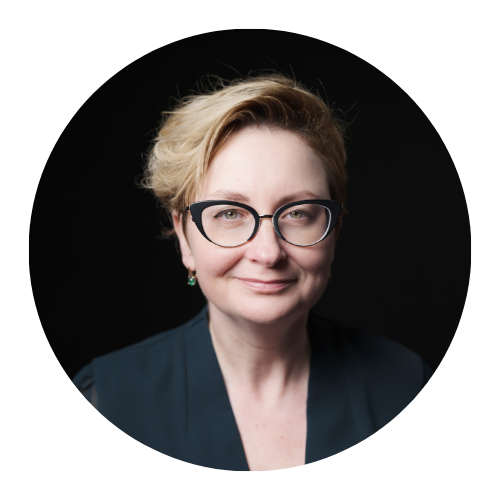
Australia
Ganna
Pogrebna
Non-Resident Fellow, Australian Strategic Policy Institute
Professor Ganna Pogrebna is a Non-Resident Fellow at the Australian Strategic Policy Institute (ASPI), where she contributes to research in cyber resilience, emerging technologies, and strategic risk. She also holds the inaugural David Trimble Chair at Queen’s Business School, Queen’s University Belfast.
An interdisciplinary scholar working at the intersection of artificial intelligence, behavioural science, and cybersecurity, her research focuses on behavioural cyber risk, human–machine teaming, algorithmic accountability, and governance of AI-enabled security systems. Previously, she was Professor of Behavioural Business Analytics and Data Science at the University of Sydney and Executive Director of the AI and Cyber Futures Institute, which she led to national recognition as Australia’s Research Institution of the Year (2025) in cybersecurity. She additionally leads the Behavioural Data Science stream at The Alan Turing Institute, contributing to frameworks for responsible AI, cyber risk governance, and algorithmic auditing.
Professor Pogrebna has authored over 100 peer-reviewed publications and led major international research programmes valued at over 20 million USD. She advises governments, defence organisations, and industry on behavioural cybersecurity, digital resilience, and national AI preparedness.
Speaker
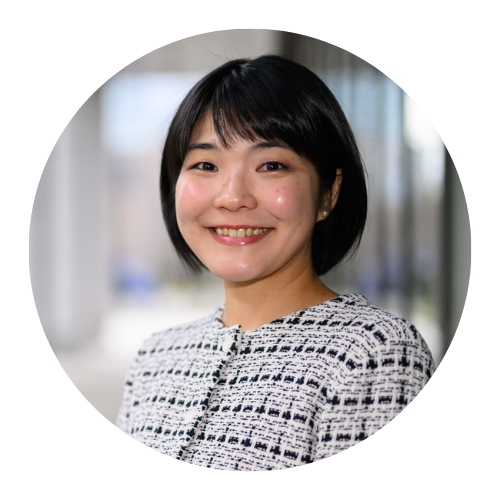
Japan
Atsuko
Sekiguchi
Deputy Director, Office of AI, Ministry of Internal Affairs and Communications
Atsuko Sekiguchi is the Deputy Director of the Office of AI at the Ministry of Internal Affairs and Communications (MIC) in Japan which coordinates AI policy. She is responsible for shaping international collaboration of AI policy in global forums such as the G7, G20 etc, and for promoting the Hiroshima AI Process to advance safe, secure, and trustworthy AI.
Her career began at MIC in 2012 after completing her BA at the University of Tokyo, where she worked in areas related to media and internet policy. During her career, she earned an LLM in telecommunication law and related fields from Queen Mary University of London (QMUL), and MSc in Media and Communications (Governance) from the London School of Economics (LSE).
After her studies she led international cybersecurity cooperation at the National Center of Incident Readiness and Strategy for Cybersecurity (NISC), Cabinet Secretariat, and later worked on the amendment of the Telecommunication Business Act in the MIC to enhance protection of users’ information.
Speaker
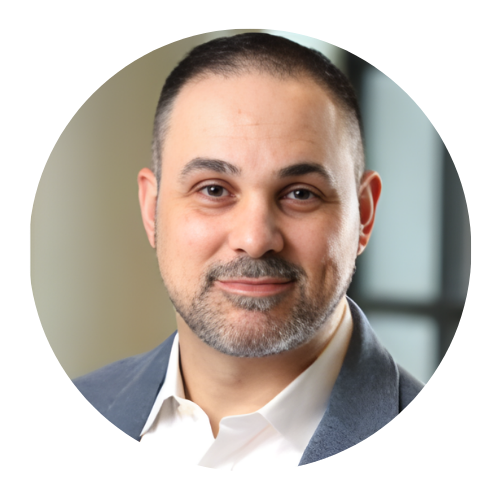
United States of America
Bob
Stasio
Associate Vice President, Interim Chief Information Security Officer, MSD
Bob Stasio currently serves as the Global Cyber Fusion Center (CFC) lead as well as the Interim Chief Information Security Officer. Bob is a seasoned security executive with over 20 years of experience in cybersecurity, IT operations, and risk management across global enterprises. Most recently, he was CIO/CISO at a Blackstone portfolio software company, where he led major IT transformations and security enhancements. Prior to that, he held senior cybersecurity leadership roles at DuPont and IBM.
Earlier in his career, Bob served as a Military Intelligence Officer in the U.S. Army and at the National Security Agency (NSA), including a combat deployment to Iraq where he was awarded the Bronze Star Medal. He also holds the Certified Information Systems Security Professional (CISSP) credential.
Speaker

Greece
Konstantina
Syntila
Cybersecurity Sales Specialist Leader for Greece, Cyprus, Malta
Konstantina Syntila is the Cisco Cybersecurity Sales Specialist Leader for Cisco Greece, Cyprus and Malta, responsible for driving sales of the Cisco’s security products and solutions across these markets. She joined Cisco in 2007 and has more than 23 years of experience in the IT industry.
She previously worked as a Presales Consultant Architect with all major service providers in Greece, Cyprus and Malta, and has been part of multiple Cisco teams in South and Eastern Europe. She has extensive experience in Service Provider Networking, Enterprise Networking Technologies and Cisco Security Solutions.
She holds a BSc and MSc in Computer Science and Telecommunications from Department of Informatics and Telecommunications of UOA. She also holds and an MBA from AUEB and CISSP certification.
Moderator
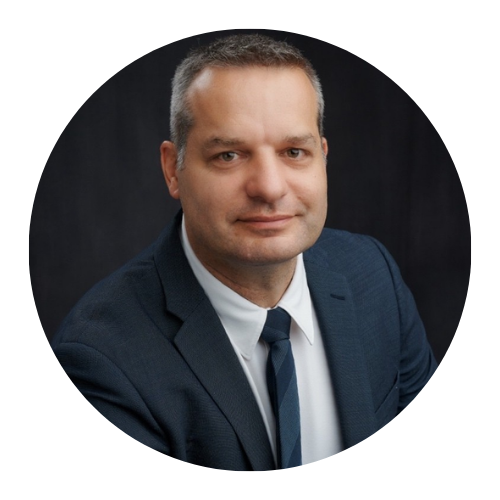
Tom Burin
Belgium
Co-Founder & CEO Delta6
Initially trained as a lawyer, I quickly recognized that the traditional legal environment was not my calling. Instead, I found my true passion as an intelligence officer at the Belgian Defense Department. I thrived in small teams of remarkable individuals with a pioneering spirit, eager to experiment with unconventional approaches. Over the course of 16 years in various command and staff roles, I gained invaluable lessons in leadership and the significance of purpose.
In 2019, I transitioned to the private sector. At Solvay and later Syensqo, I successfully designed, expanded, and optimized robust anticipation systems from the ground up, integrating them seamlessly into diverse corporate decision-making processes.
My drive to assist more organizations eventually culminated in the establishment of Delta 6 in 2025. Together with my business partner Dimitri, we empower our clients to implement actionable anticipation systems and connect them with our extensive network of world-class experts across various domains.